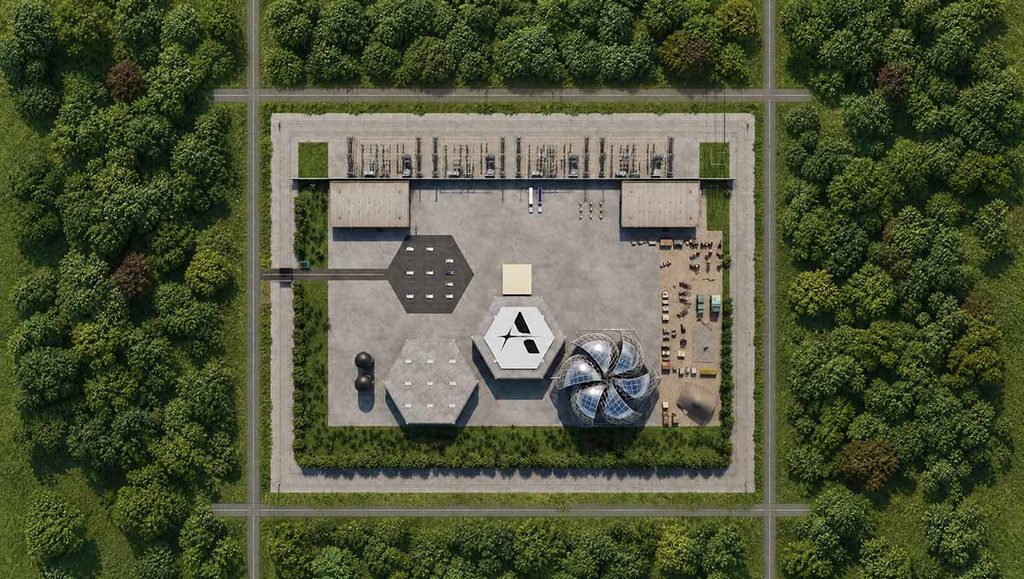
Wisconsin’s Dairyland Power Cooperative is exploring the potential of small modular reactors to add a baseload, zero-carbon energy source to its fuel mix under a new agreement with nuclear power firm Applied Atomics Inc.
Dairyland signed a letter of intent last month to evaluate deployment of Applied Atomics’ SMR technology at the La Crosse-based co-op’s Genoa site in southwest Wisconsin and consider a resulting power purchase agreement with the firm.
The Genoa site hosted a now-dismantled and decommissioned 50-megawatt nuclear plant and still has a federally licensed spent fuel storage installation.
“Dairyland continues to evaluate emerging technologies that could support a reliable, resilient and lower-carbon energy future for our members and the region,” Dairyland President and CEO Brent Ridge said in the joint announcement with Applied Atomics. “This agreement allows us to take a closer look at Applied Atomics’ technology and its potential to better understand how it may complement our evolving generation portfolio.”
SMRs are smaller-scale nuclear units that can be factory-assembled and shipped to the power plant site. Applied Atomics’ SMRs can be scaled to 100-150 MW, ideal for co-ops that may not need the output of traditional large nuclear plants, Dairyland Executive Vice President and Chief Nuclear Officer Grover Hettel said in an interview.
Applied Atomics’ SMR design incorporates mature, light-water reactor technology that runs on the low-enriched uranium currently used in most commercial light-water nuclear plants.
“It’s called Generation III+ technology—today’s technology with safety enhancements,” Hettel said.
Nuclear energy, including SMRs, can provide load-following support for renewable energy and is part of Dairyland’s exploration of a “diverse portfolio,” Hettel said.
But any investment in SMR capacity “will have to be a good situation for us and for our members before we would finally execute it,” he cautioned.
Hettel said Dairyland and Applied Atomics plan to conduct a feasibility study for building one or more SMRs at the Genoa site, followed by a more formal site characterization study. The co-op will then evaluate its financial options for pursuing an SMR power purchase agreement, including any potential federal loans and grants.
“Nine months or so from now, we should be at a point where we can make a determination to enter into a binding contract for a power purchase agreement,” Hettel said, adding that any deal to pursue SMRs must be “cost-competitive.”
To qualify for federal tax incentives, the project would need to come online by 2032, but Dairyland is hoping those credits will be extended.
Along with providing carbon-free, baseload power, SMRs would benefit the Genoa community through tax revenue and job creation, said Katie Thomson, Dairyland’s director, communications, member services & stakeholder engagement.
“What we have always done is look out for rural America, and a project like this supports local communities while bringing reliability and environmental benefits,” she said.
Molly Christian is a staff writer for NRECA.